
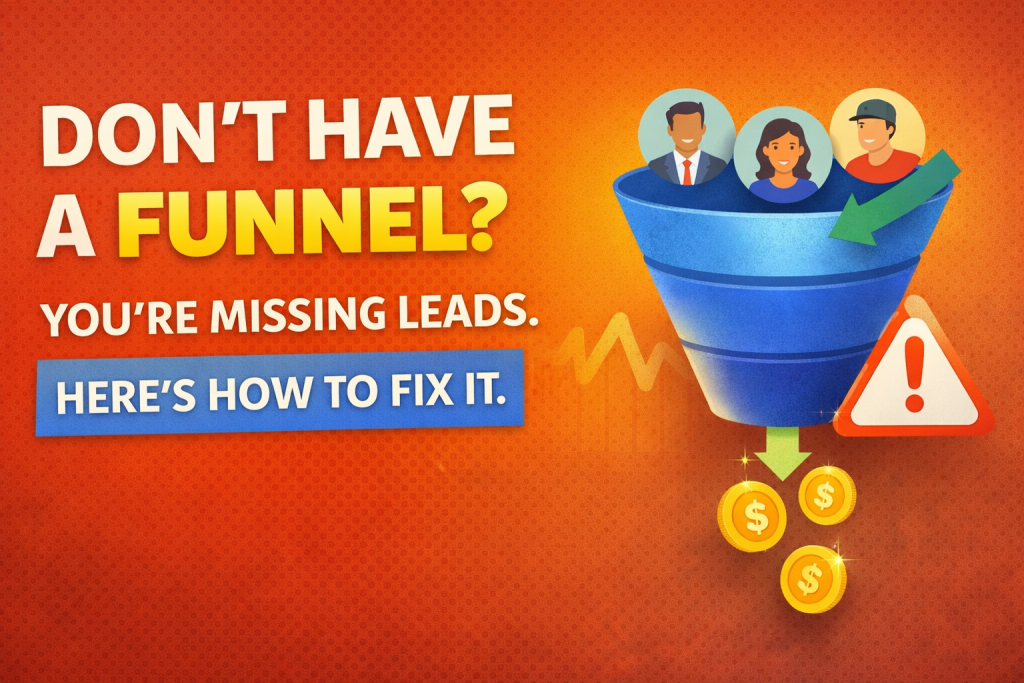
“Marketing funnels” sound like some complex internet-guru thing most service business owners don’t have time for. In reality, a funnel is just the simple path that turns strangers into buyers—and then into repeat customers. If you don’t define that path on purpose, you’re leaving money on the table and forcing every sale to depend on you personally following up, every time.
What a Marketing Funnel Actually Is (No Jargon)
A funnel is just the step-by-step journey someone takes from first hearing about you… to becoming a loyal client. At the top, you’ve got people who barely know you exist. In the middle, they’re interested but not ready yet. At the bottom, they’re deciding whether to book, buy, or ignore you.
For service businesses, a simple funnel usually looks like this: they discover you (Google, ads, referrals), visit your website or Google profile, give you their info or call, get follow-up, book a job, and—if you’re smart—get nurtured into long-term, repeat business.
Why Service Businesses Need a Funnel
- You Stop Relying on Luck and Memory
Without a funnel, every new lead is a random event. You might follow up today… or forget. A funnel lets you automate the steps between “they found us” and “they became a client,” so nothing slips through the cracks. - It Increases Conversions Without More Traffic
You don’t always need more eyeballs—you need more of the people already finding you to say yes. A good funnel improves each step: better landing pages, clearer offers, smarter follow-up. That’s exactly what services like Lead Conversion Optimization are built to do. - It Turns One-Time Jobs Into Long-Term Revenue
Most of your profit comes from repeat work and referrals, not the first transaction. A funnel keeps you in touch with past customers, so they don’t forget you when they need help again—or when a friend asks for a recommendation.
The Simple 4-Stage Funnel for Service Businesses
Stage 1: Awareness (They Discover You)
This is where people first see your brand—Google search, Google Business Profile, local SEO, referrals, social media, or ads. Your goal: show up where they’re already looking and make it clear what you do and who you serve.
Stage 2: Interest (They Check You Out)
Now they’re on your website or profile, reading reviews, and deciding if you’re legit. This is where high-converting homepages, strong service pages, and real testimonials matter. They should clearly see problems you solve, who you help, and what to do next.
Stage 3: Decision (They Reach Out or Book)
They submit a form, call, or book online. Your job here is to make it insanely easy: short forms, click-to-call buttons, simple scheduling, and fast response. This is where a lot of leads die if you don’t have a system.
Stage 4: Retention & Expansion (They Come Back and Spend More)
After the job is done, a smart funnel keeps them warm with follow-up, check-ins, review requests, and targeted offers. This is where you nurture repeat business, upsells, referrals, and long-term loyalty.
Easy Automations You Can Set Up (Without a Huge Tech Stack)
Automated Lead Capture + Instant Response
Every form on your site or landing pages should feed into a CRM or simple pipeline. As soon as a lead comes in, they get an automatic confirmation email or text: “Got your request—here’s what happens next.” This alone makes you look more professional and reduces drop-off.
Email or SMS Nurture for “Not Yet” Leads
Most people won’t book on day one. Set up a short sequence (3–7 messages over a couple of weeks) that:- Answers common questions
- Shares testimonials or case studies
- Explains your process and pricing expectations
- Invites them to schedule a call or estimate
This doesn’t have to be fancy. It just needs to be consistent.
Post-Job Follow-Up and Review Requests
After you finish a job, your funnel should trigger:- A thank-you message
- A link to leave a Google review
- A reminder of other services you offer
This is how you turn a one-off job into more visibility and future work.
Retention and Upsell Campaigns
For services that repeat (HVAC maintenance, pest control, legal check-ins, landscaping, cleaning, etc.), schedule reminders based on time since last service. “It’s been 6 months since your last visit—ready for a tune-up?” This is simple, boring automation that quietly prints money.
What a Done-For-You Funnel Looks Like
A solid, done-for-you funnel for a service business usually includes: a focused landing page or homepage built to convert, connected forms and calls that feed into a central system, automated email/SMS follow-ups, and tracking so you know which leads turn into revenue. That’s the core of what our Landing Pages & Sales Funnels service is designed to build—so your marketing doesn’t depend on you manually chasing every lead.
You don’t need a 27-step “guru” funnel. You need a clear path, a few smart automations, and the discipline to keep improving each stage. When your funnel is dialed in, leads don’t vanish, follow-up happens automatically, and your calendar fills more predictably.
If you want help mapping and building a funnel that fits your specific service business, explore our Lead Conversion Optimization packages or dig into more practical guides on the Movou blog.