
By Chris Leo, Movou
If you run a plumbing, HVAC, landscaping, pest control, or handyman business, you’ve probably written off TikTok as a place for dancing teenagers. That assumption is now costing you customers. TikTok for home service businesses isn’t a novelty play anymore â it’s become a discovery engine, and the businesses figuring that out first are the ones booking the jobs.
Here’s what changed, what’s actually working right now, and how to start without hiring a video team.
- Key Takeaways:
- TikTok now functions as a search engine for a large share of consumers â not just an entertainment feed, which matters most for businesses people search for by name or need.
- The platform’s own documentation says completion rate (finishing a video) carries more weight than likes or follower count. Short, tight, useful videos beat polished ones.
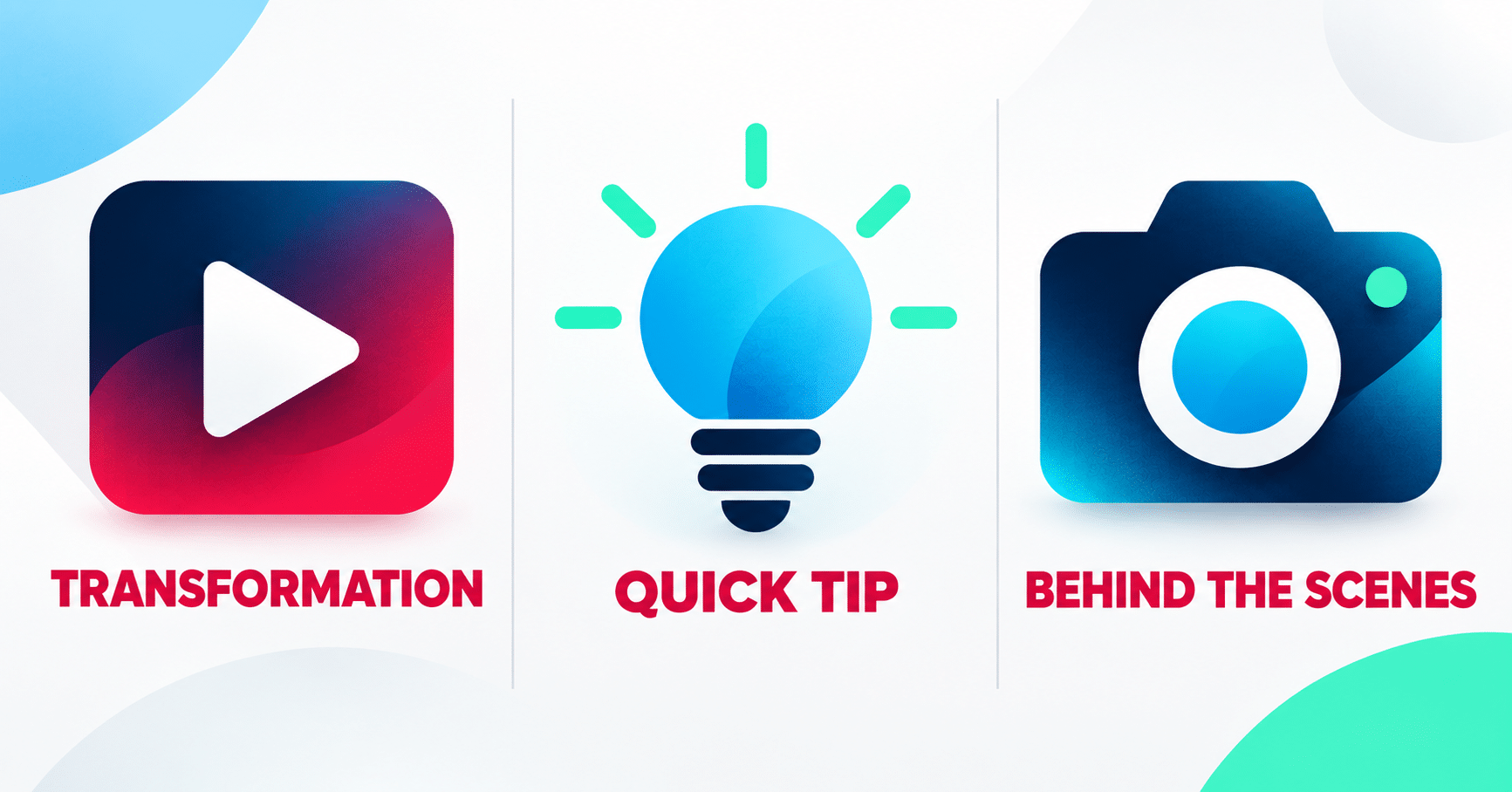
- Three content formats consistently work for service businesses: transformation clips, quick educational tips, and behind-the-scenes/personality content.
- You don’t need a large following, a studio, or a script. You need a phone, a real job, and a reason to hit record.
Why TikTok Still Matters for Home Service Businesses in 2026
The scale alone is hard to ignore: TikTok has roughly 136 million monthly active users in the United States, and about 65% of them are 25 or older â the exact age range that owns a home, hires a plumber, and pays for pest control (DemandSage, 2026). This was never a Gen-Z-only platform, and it hasn’t been for years.
What’s changed more recently is intent. TikTok’s algorithm doesn’t care how big your following is â it cares about whether people watch, and for how long. That means a business with 200 followers and a genuinely useful video can outperform a business with 20,000 followers and a boring one. Your small, local business has the exact same shot at getting seen as a national brand, if the content earns it.
TikTok Is Now a Search Engine â And Your Customers Are Using It
This is the part most “TikTok for business” advice from a few years ago still misses. According to a 2026 consumer study cited by Google’s own Keyword blog, nearly 49% of U.S. consumers now use TikTok as a search engine â up from 41% just two years earlier (The Keyword, 2026). People are typing questions like “how do I know if I need a new water heater” or “signs you have termites” directly into TikTok’s search bar the same way they’d type it into Google.
That’s a real opportunity for home service businesses specifically, because the searches people run are almost always tied to a real, urgent problem. If your video answers that exact question â on camera, in under a minute â you’re not just getting views. You’re getting found by someone who needs a contractor right now.
Practically, this means: say the actual problem out loud in your video (not just show it), put the plain-language question in your on-screen caption, and use hashtags that match how a homeowner would search, not just your trade’s internal jargon.
Watch Time Is the Algorithm’s Real Currency
TikTok’s own documentation on how the For You feed works is unusually direct about this: a strong signal of interest â like whether someone watches a longer video all the way to the end â gets weighted more heavily than a like, share, or follow (TikTok Newsroom). In plain terms: a 20-second video that people watch to the end will usually out-earn a 90-second video that people scroll past at second six.
That’s good news for a service business with no production budget. It rewards the exact thing you already have: a real job, filmed simply, with a hook in the first two seconds and nothing wasted after that. It penalizes over-produced content that takes too long to get to the point â which is exactly the kind of content a small business usually can’t afford to make anyway.
3 Content Types That Actually Work for Service Businesses
You don’t need ten content pillars. These three formats cover almost everything that performs well for trades and home service brands.
1. Transformation clips
Before-and-after is the oldest trick in home services marketing because it still works â a clogged drain running clear again, a stained driveway coming back to bright concrete, an overgrown yard turning into a finished landscape. On TikTok, the format that performs is simple: static or slow-pan shot, quick time-lapse of the work, then the reveal. No music drop needed â the visual payoff carries it.
2. Quick, specific tips
Short, useful information positions you as the expert and often ranks for exactly the kind of search-style query covered above â “why is my AC blowing warm air,” “how often should you flush a water heater,” “signs your gutters are about to fail.” One clear answer per video, said in the first few seconds, works better than a long explainer.
3. Behind-the-scenes and personality
A morning toolbox routine, a client’s funny request, an honest “here’s what I found when I opened this wall up” moment. People hire people they trust, and this is the format that builds that trust fastest â because it can’t be faked by a competitor with a bigger ad budget.
Posting Rules That Hold Up in 2026
- Post consistently, not constantly. Three to five times a week is enough for the algorithm to learn your content and your audience. Sporadic posting resets that learning every time.
- Keep it tight. Given the completion-rate signal above, most service-business videos should land well under 60 seconds. Say the point, show the work, stop.
- Caption for search, not just style. Since people are searching TikTok directly, write your on-screen text and caption the way a homeowner would type the question.
- Use hashtags people actually search, not just your trade name. A city or neighborhood plus the specific problem beats a generic industry hashtag.
- Turn comments into content. If someone asks a question in your comments, answer it in a new video. It’s free topic research and it keeps the algorithm engaged with your account.
What This Looks Like in Practice
In our own work with service businesses, the pattern holds up consistently: the videos that turn into booked jobs are rarely the most polished ones. They’re the ones that show a real problem, a real fix, filmed in the moment, with a location tag and a caption that matches how someone would actually search for help. A tight 20-second clip of an actual repair, posted the same day the work happened, tends to earn more watch time â and more calls â than a heavily edited highlight reel posted a week later.
If you want to see what consistent posting compounds into over time, including the honest numbers, we published a full breakdown of our own recent posting run: what 26 social posts across our channels actually earned.
Frequently Asked Questions
Do I need a large following for TikTok to work for my business?
No. TikTok’s recommendation system surfaces content based on watch behavior, not follower count, so a new account with zero followers can still reach people searching for what you do.
How often should a home service business post on TikTok?
Three to five times a week is a reasonable, sustainable target. Consistency matters more than volume â sporadic bursts followed by silence perform worse than a steady, modest cadence.
What kind of TikTok content works best for home service businesses?
Transformation or before-and-after clips, short answers to specific questions customers actually ask, and honest behind-the-scenes moments from real jobs. All three can be filmed on a phone with no editing software.
Is TikTok really used as a search engine?
Yes. A 2026 consumer study found that nearly half of U.S. consumers now use TikTok to search for information, up from 41% two years prior, which is why captions and on-screen text written in plain, searchable language matter as much as the video itself.
Your Next Customer Is Already Scrolling
You don’t need a studio, a script, or a marketing degree to start. You need a real job, a phone, and a willingness to hit record before you talk yourself out of it. Start with one format from the three above, post it this week, and build from there.
If you want help turning this into a repeatable system â or repurposing what you post on TikTok into Instagram Reels and YouTube Shorts â book a free strategy call with our team.